
Mongolian Food?
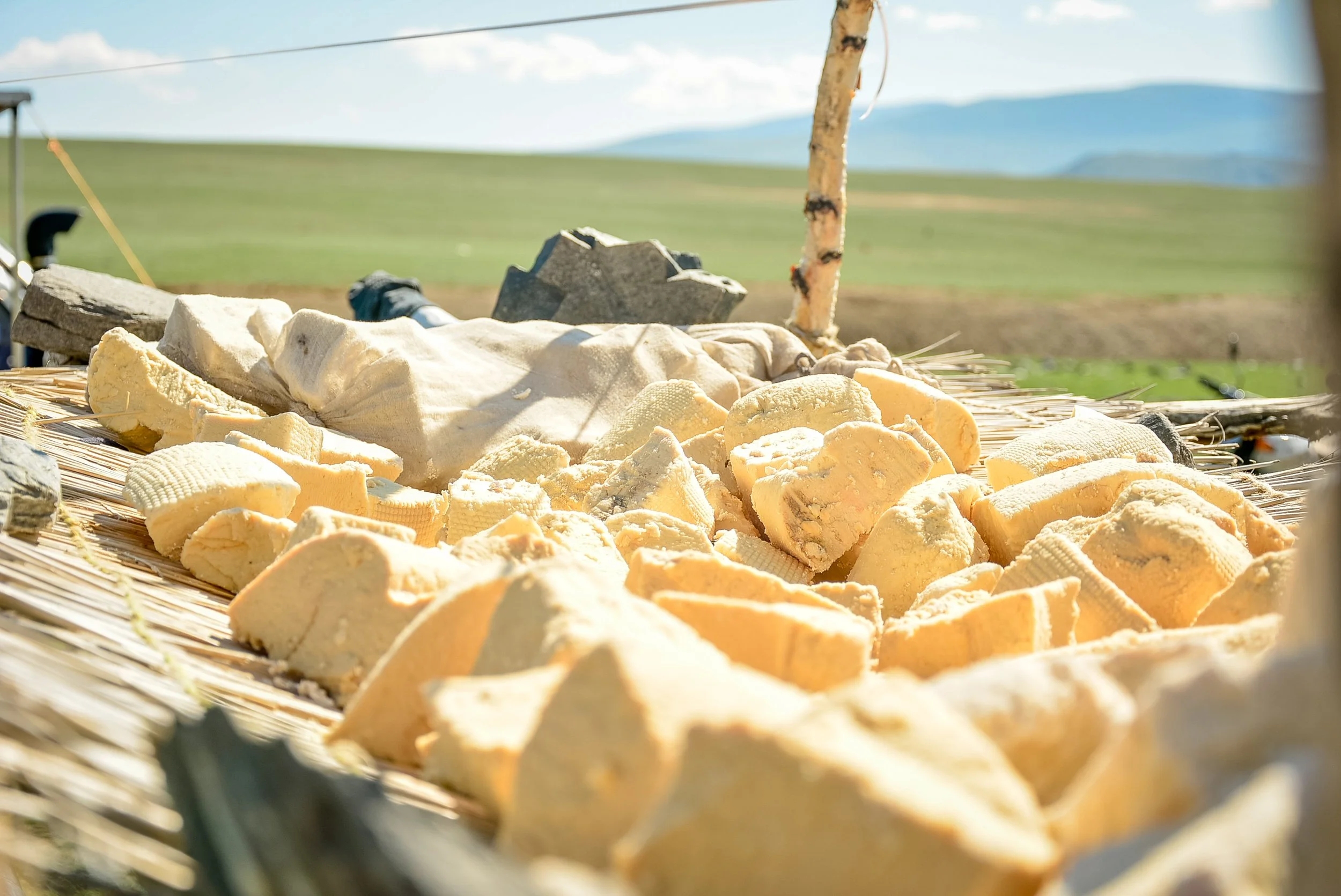
Yaks curds drying the tradtional way in the sun in Mongolia
To be revered not feared…
When I came to Mongolia in 2013 for the Mongol Derby, like most people travelling there for the first time, I was a little nervous about the food.
I'd heard all the stories. Endless mutton, bowels of steaming sheep guts. Strange dairy products. Fermented mare's milk. Rock-hard cheese. The internet is full of "shock value" articles about what Mongolians eat, and I'll admit, I arrived expecting it to be one of the biggest challenges of the journey.
Thirteen years later, after more than 12,000 kilometres on horseback across Mongolia, I couldn't feel more differently.
In fact, I genuinely believe Mongolia has one of the healthiest traditional diets on Earth.
The meat comes from animals that spend their lives roaming freely across vast landscapes, grazing on hundreds of different grasses, herbs and native plants. There are no feedlots, no grain finishing and very little of the intensive farming seen elsewhere in the world. The result is incredibly flavoursome meat that reflects the seasons and the landscape it comes from.
Then there's the dairy.
Long before fermented foods became fashionable in the West, Mongolians were producing cultured milk, yoghurt, cheeses and traditional dairy products that have sustained nomadic families for centuries. Today, modern research continues to highlight the benefits of fermented foods as part of a healthy diet, and it's fascinating to see just how deeply these traditions are woven into everyday life.
Perhaps most importantly, milk is far more than just food in Mongolia.
It is sacred.
It represents life, hospitality and survival. For thousands of years it has nourished families through long winters and harsh conditions, and it still plays a central role in Mongolian culture today. You'll see milk offered to guests, used in ceremonies and treated with enormous respect.
One of the wonderful things about Mongolia is the incredible variety of dairy, depending on where you travel. Throughout the country you'll encounter products made from:
Horse (mare's milk)
Yak
Cow
Goat
Sheep
Camel
Reindeer (in the far northern taiga)
Every region has its own traditions and favourite recipes.
Some of my own favourites might surprise you.
Yak yoghurt is, in my opinion, one of the finest treats you'll ever taste—rich, creamy and wonderfully satisfying after a long day in the saddle.
Airag, the famous fermented mare's milk, is probably Mongolia's most misunderstood drink. It has a distinctive flavour that isn't what many first-time visitors expect, but served cold on a hot summer's day, it can be incredibly refreshing. Rather than fearing it, I think it's something to approach with curiosity and an appreciation for the centuries of tradition behind it.
Reindeer milk, found among the Dukha reindeer herders in the north, is unlike anything else. It's thick, rich and almost custard-like, reflecting the unique environment and the remarkable animals that produce it.
And then there are simple cow's milk curds. They may not look particularly exciting, but they'll keep you going for hours on a long ride.
Of course, there are a few surprises waiting for newcomers!
One of the funniest is Mongolia's famous dried curds, known as aaruul. At first glance, many people think they're little cubes of fudge or sweet treats. The excitement usually lasts until the first bite. These traditional dried cheeses are incredibly hard, often wonderfully tangy rather than sweet, and they have a reputation for catching out first-time visitors. Let's just say they're best approached with a little caution—and strong teeth!
Like so much of Mongolia, the food rewards those who arrive with an open mind.
What first seems unfamiliar soon becomes comforting. Meals become conversations, dairy becomes culture, and sharing food inside a warm ger becomes one of the experiences you'll remember long after you've gone home.
The greatest journeys don't just change the landscapes you see—they change the way you think. Mongolia certainly changed the way I think about food