
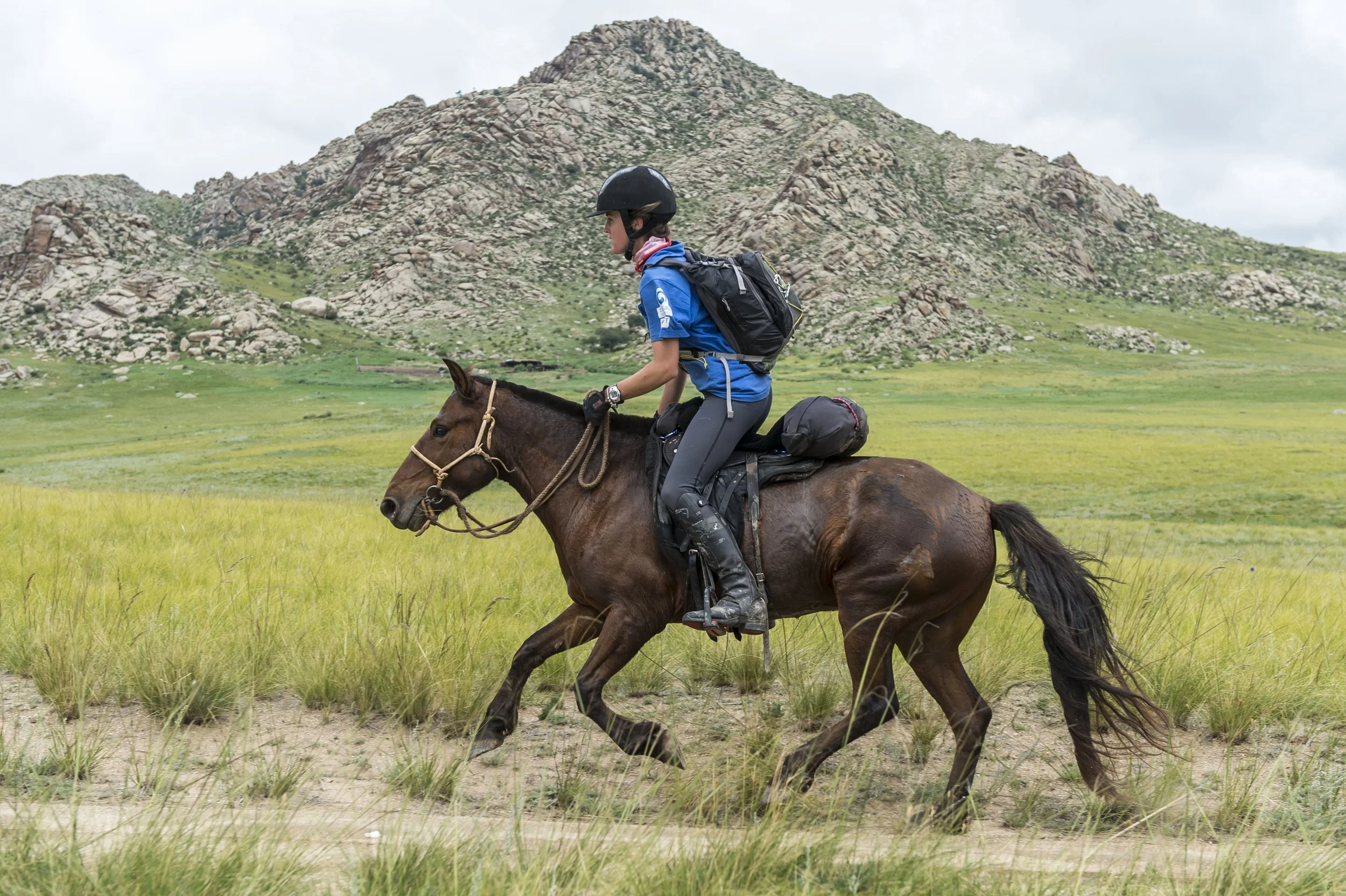
Mongol Derby or The Great Nomad Challenge.
Chloe Phillips-Harris rode the Mongol Derby in 2013 and has since covered over 10,000km in Mongolia! Competing in the Great Nomad Challenge 4 times. Is the Mongol Derby or the Great Nomad Challenge better?
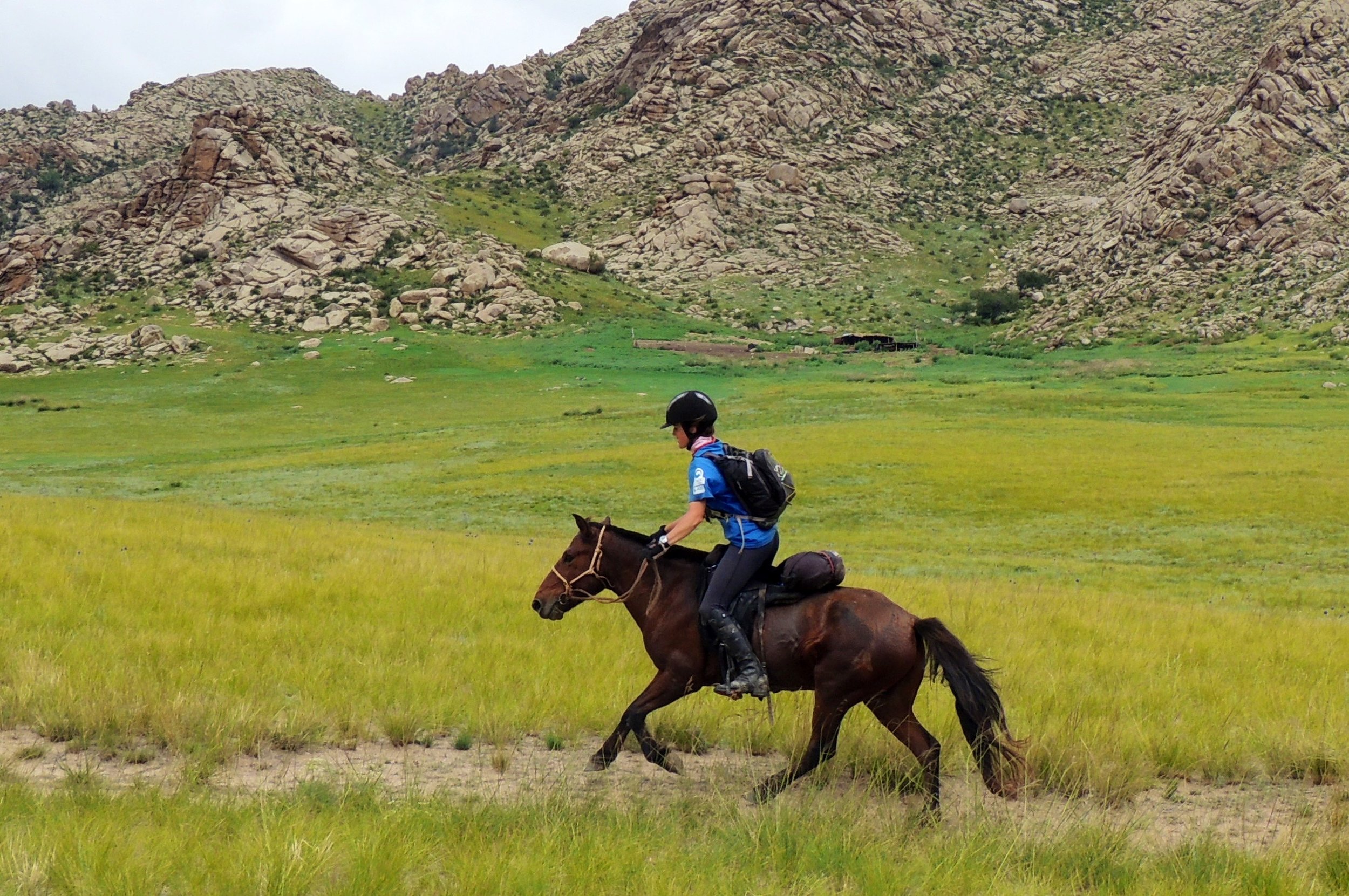
Chloe Phillips-Harris riding the Mongol Derby in 2013
Great Nomad Challenge or the Mongol Derby?
It's a question I get asked all the time.
Having completed the Mongol Derby and now having ridden well over 10,000 km across Mongolia, I can honestly say they are two very different adventures—and both are among the hardest and longest horseback rides on the planet.
The Mongol Derby is the world's longest horse race. Covering around 1,000 km over approximately 10 days, it's an incredible endurance event where speed, navigation and strategy are everything. Entry fees are typically around US$17,000–20,000, and for many riders it represents the ultimate competitive challenge.
The Great Nomad Challenge covers an even greater distance—approximately 1,200 km in 3 weeks—and while it is not a race, don't mistake that for meaning it's easy. Long days in the saddle, changing horses, riding camels, yaks and reindeer, remote wilderness, unpredictable weather and immense physical and mental endurance make it one of the most demanding equestrian expeditions in the world. At around US$15,000, it also offers a very different type of adventure.
The biggest difference isn't the kilometres—it's the purpose.
The Great Nomad Challenge is far more than simply riding across Mongolia. It's about understanding one of the last great nomadic cultures on Earth. It's about sitting in family gers, sharing meals, learning traditions that have survived for centuries, and seeing a side of Mongolia that very few outsiders ever experience.
You'll still enjoy exhilarating gallops across the endless steppe, the challenge of adapting to different horses and terrains, and the satisfaction of pushing yourself far beyond what you thought possible. But you'll also ride alongside camel herders, yak herders and the Dukha reindeer people, gaining a deeper appreciation of the extraordinary relationship between Mongolia's people, animals and landscapes.
For some riders, the Great Nomad Challenge is the perfect stepping stone before taking on the Mongol Derby. It teaches you how to ride Mongolian horses over long distances, cope with remote conditions, develop endurance and confidence, and become comfortable living and travelling as the nomads do.
For others, it's exactly what they're looking for—a journey where the greatest reward isn't crossing a finish line, but returning home with a completely different perspective on the world.
Both adventures will challenge you.
Both will change you.
But if you're looking for an expedition that combines world-class endurance riding with authentic cultural immersion, extraordinary wildlife, lifelong friendships and the chance to leave a positive impact on the communities you visit, then the Great Nomad Challenge may just be the adventure you've been searching for.
If you're ready to discover what you're really capable of, we'd love to welcome you to Mongolia.
-Chloe Phillips-Harris
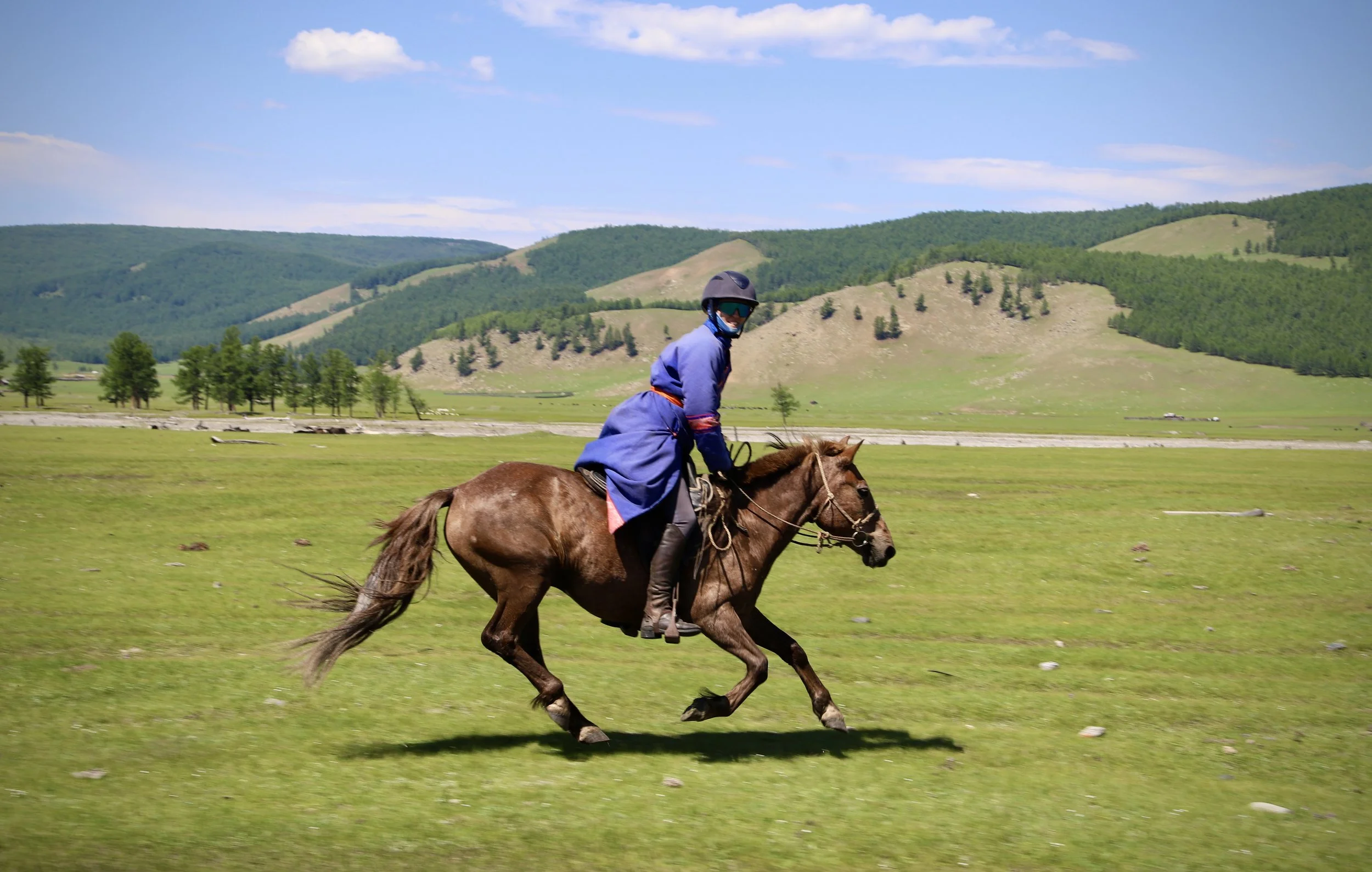
Riding the Great Nomad Challenge in tradtional Mongolian gear 2025
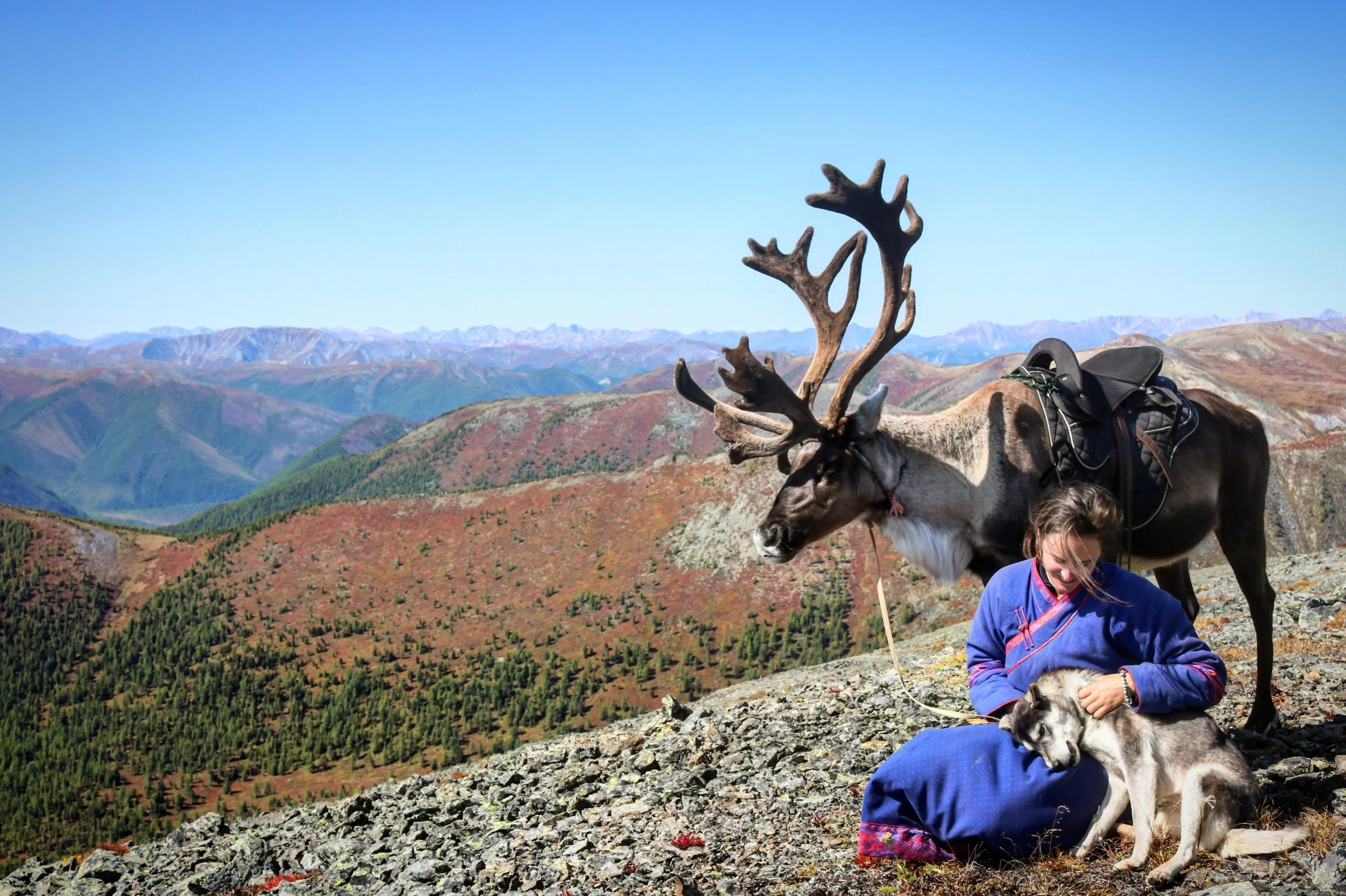
Duhka or Tsaatan: What to call Mongolia’s Nomadic Reindeer Riders?

If you've spent any time researching Mongolia's famous reindeer herders, you've probably come across two different names.
Dukha.
Tsaatan.
So... which one is actually correct?
The short answer is that both are correct, kind of, but they don't mean quite the same thing. Understanding the difference gives you a fascinating insight into the people themselves and why so many visitors (and travel companies) get confused.
The Name Everyone Knows: Tsaatan
For many years, the name Tsaatan was the one most travellers encountered first.
In Mongolian, tsaa means reindeer, and Tsaatan roughly translates to "the people with reindeer" or "reindeer people."
It's an easy name to understand because that's exactly what makes these northern nomads so unique. They live alongside their reindeer, migrate with them through the taiga forests, milk them, ride them and depend on them in ways that have changed little over centuries.
So it's no surprise that the name became widely used in guidebooks, documentaries and tourism.
The catch?
It isn't actually the name the people traditionally call themselves. It can also be a pretty culturally insenstive term to use.
Their Own Name: Dukha
The people themselves are Dukha.
This is their ethnic identity, not simply a description of what they do.
Their ancestors originated in what is now southern Siberia, particularly the Tuva region, before borders changed and some families settled in northern Mongolia generations ago.
Today, many members of the community identify as Dukha, while Tsaatan remains the Mongolian word used to describe them as the "reindeer people."
Think of it like the difference between referring to someone by their nationality versus their profession.
One describes who they are.
The other describes what they are known for.
Why Does Everyone Get Confused?
Because both names are used interchangeably.
You'll find books that use Tsaatan.
Academic papers that use Dukha.
Old documentaries using one.
New documentaries using the other.
Even in Mongolia you'll hear local people refer to them as Tsaatan, while members of the community may introduce themselves as Dukha.
Neither term is necessarily "wrong." They simply come from different perspectives.
It's a little like hearing "Inuit" and "Eskimo." One reflects how people identify themselves, while the other has a different historical origin. Although the comparison isn't perfect, it helps explain why names matter.
They're Much More Than Reindeer Herders
One thing that often gets lost in this conversation is that reducing the Dukha to simply "reindeer people" overlooks the richness of their culture.
They are extraordinary horsemen and women.
Expert hunters and gatherers.
Families who know every valley, mountain pass and river in the northern taiga.
People whose lives revolve around the seasons rather than the calendar.
The reindeer are at the heart of their lives, but they are only one part of a much bigger cultural story.
Which Name Do We Use?
At Great Nomad Expeditions, we generally use Dukha, because it reflects the community's own identity.
However, we'll often write "the Dukha (also known as the Tsaatan or Mongolia's reindeer people)" to help readers who may have heard the more familiar name.
After all, if someone searches for Tsaatan online, we still want them to find the incredible people we're talking about.
One Final Thought
Whether you know them as the Dukha or the Tsaatan, one thing matters far more than the name itself.
They are one of the last remaining nomadic reindeer-herding cultures on Earth.
Their way of life survives because families continue to migrate through Mongolia's northern taiga alongside their reindeer, just as generations before them have done.
It's a culture that deserves curiosity, respect and understanding—not simply because it is rare, but because it reminds us that there are still places in the world where people live in remarkable harmony with animals, seasons and landscape.
And if you're fortunate enough to spend time with the Dukha, you'll quickly realise that by the end of the journey, you stop worrying about what to call them.
You're simply grateful they welcomed you into their world.
Mongolian Food?
Don’t believe the stories Mogolian food is nowhere near as scary as people make it sound. Cheses, meat, dumplings and yes a little bit oif fermented mares milk are all part of what makes a tradtional mongolian diet
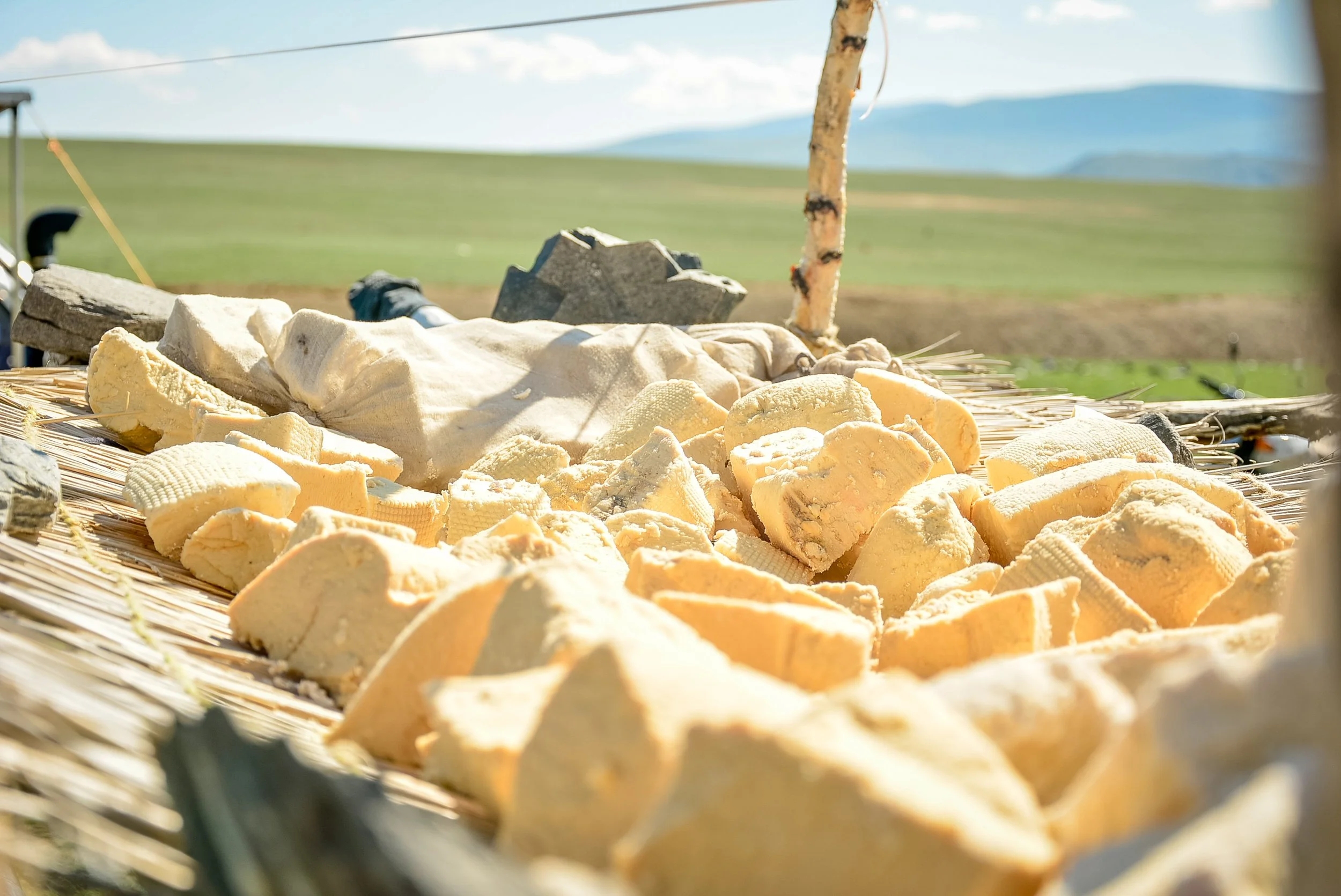
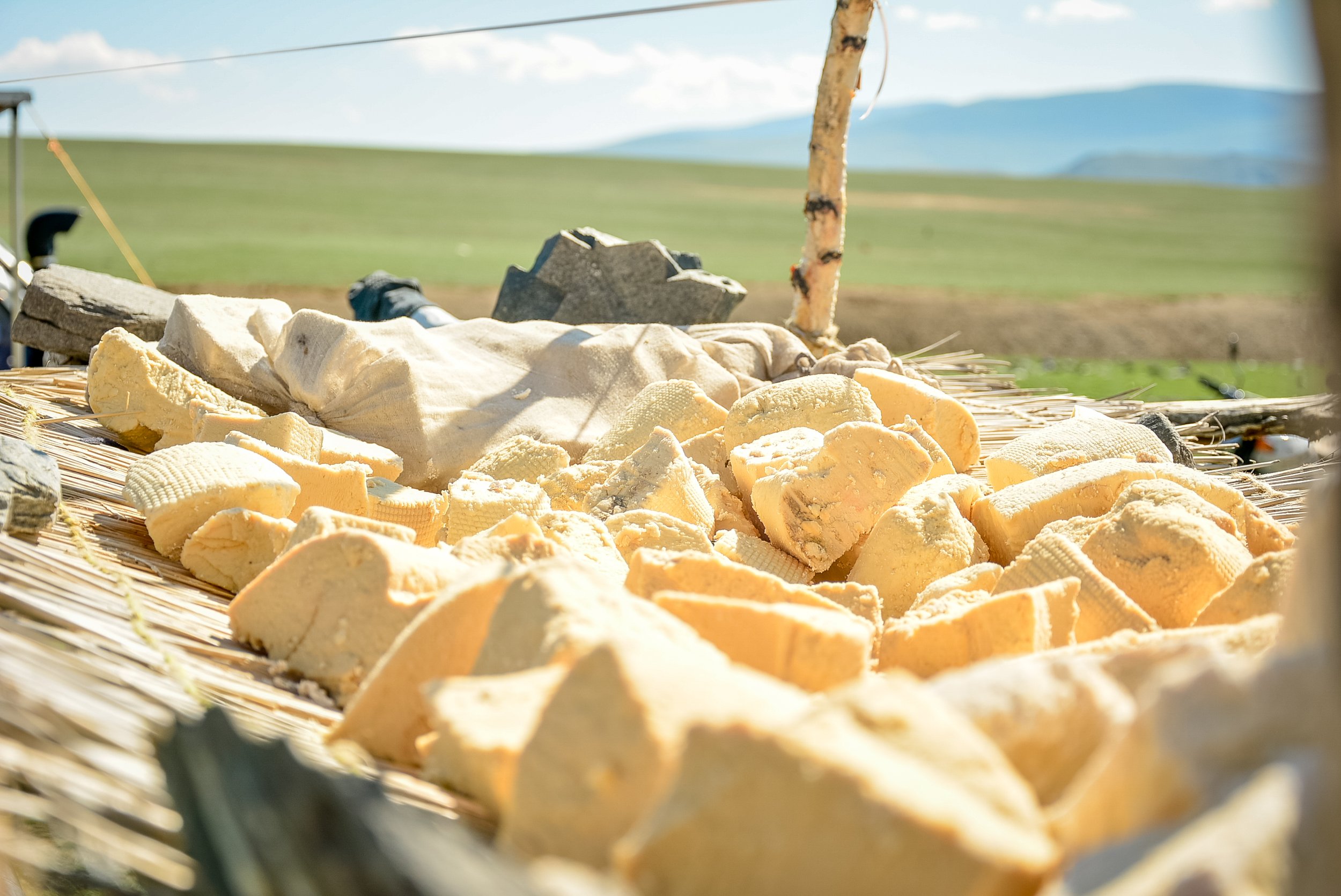
Yaks curds drying the tradtional way in the sun in Mongolia
To be revered not feared…
When I came to Mongolia in 2013 for the Mongol Derby, like most people travelling there for the first time, I was a little nervous about the food.
I'd heard all the stories. Endless mutton, bowels of steaming sheep guts. Strange dairy products. Fermented mare's milk. Rock-hard cheese. The internet is full of "shock value" articles about what Mongolians eat, and I'll admit, I arrived expecting it to be one of the biggest challenges of the journey.
Thirteen years later, after more than 12,000 kilometres on horseback across Mongolia, I couldn't feel more differently.
In fact, I genuinely believe Mongolia has one of the healthiest traditional diets on Earth.
The meat comes from animals that spend their lives roaming freely across vast landscapes, grazing on hundreds of different grasses, herbs and native plants. There are no feedlots, no grain finishing and very little of the intensive farming seen elsewhere in the world. The result is incredibly flavoursome meat that reflects the seasons and the landscape it comes from.
Then there's the dairy.
Long before fermented foods became fashionable in the West, Mongolians were producing cultured milk, yoghurt, cheeses and traditional dairy products that have sustained nomadic families for centuries. Today, modern research continues to highlight the benefits of fermented foods as part of a healthy diet, and it's fascinating to see just how deeply these traditions are woven into everyday life.
Perhaps most importantly, milk is far more than just food in Mongolia.
It is sacred.
It represents life, hospitality and survival. For thousands of years it has nourished families through long winters and harsh conditions, and it still plays a central role in Mongolian culture today. You'll see milk offered to guests, used in ceremonies and treated with enormous respect.
One of the wonderful things about Mongolia is the incredible variety of dairy, depending on where you travel. Throughout the country you'll encounter products made from:
Horse (mare's milk)
Yak
Cow
Goat
Sheep
Camel
Reindeer (in the far northern taiga)
Every region has its own traditions and favourite recipes.
Some of my own favourites might surprise you.
Yak yoghurt is, in my opinion, one of the finest treats you'll ever taste—rich, creamy and wonderfully satisfying after a long day in the saddle.
Airag, the famous fermented mare's milk, is probably Mongolia's most misunderstood drink. It has a distinctive flavour that isn't what many first-time visitors expect, but served cold on a hot summer's day, it can be incredibly refreshing. Rather than fearing it, I think it's something to approach with curiosity and an appreciation for the centuries of tradition behind it.
Reindeer milk, found among the Dukha reindeer herders in the north, is unlike anything else. It's thick, rich and almost custard-like, reflecting the unique environment and the remarkable animals that produce it.
And then there are simple cow's milk curds. They may not look particularly exciting, but they'll keep you going for hours on a long ride.
Of course, there are a few surprises waiting for newcomers!
One of the funniest is Mongolia's famous dried curds, known as aaruul. At first glance, many people think they're little cubes of fudge or sweet treats. The excitement usually lasts until the first bite. These traditional dried cheeses are incredibly hard, often wonderfully tangy rather than sweet, and they have a reputation for catching out first-time visitors. Let's just say they're best approached with a little caution—and strong teeth!
Like so much of Mongolia, the food rewards those who arrive with an open mind.
What first seems unfamiliar soon becomes comforting. Meals become conversations, dairy becomes culture, and sharing food inside a warm ger becomes one of the experiences you'll remember long after you've gone home.
The greatest journeys don't just change the landscapes you see—they change the way you think. Mongolia certainly changed the way I think about food
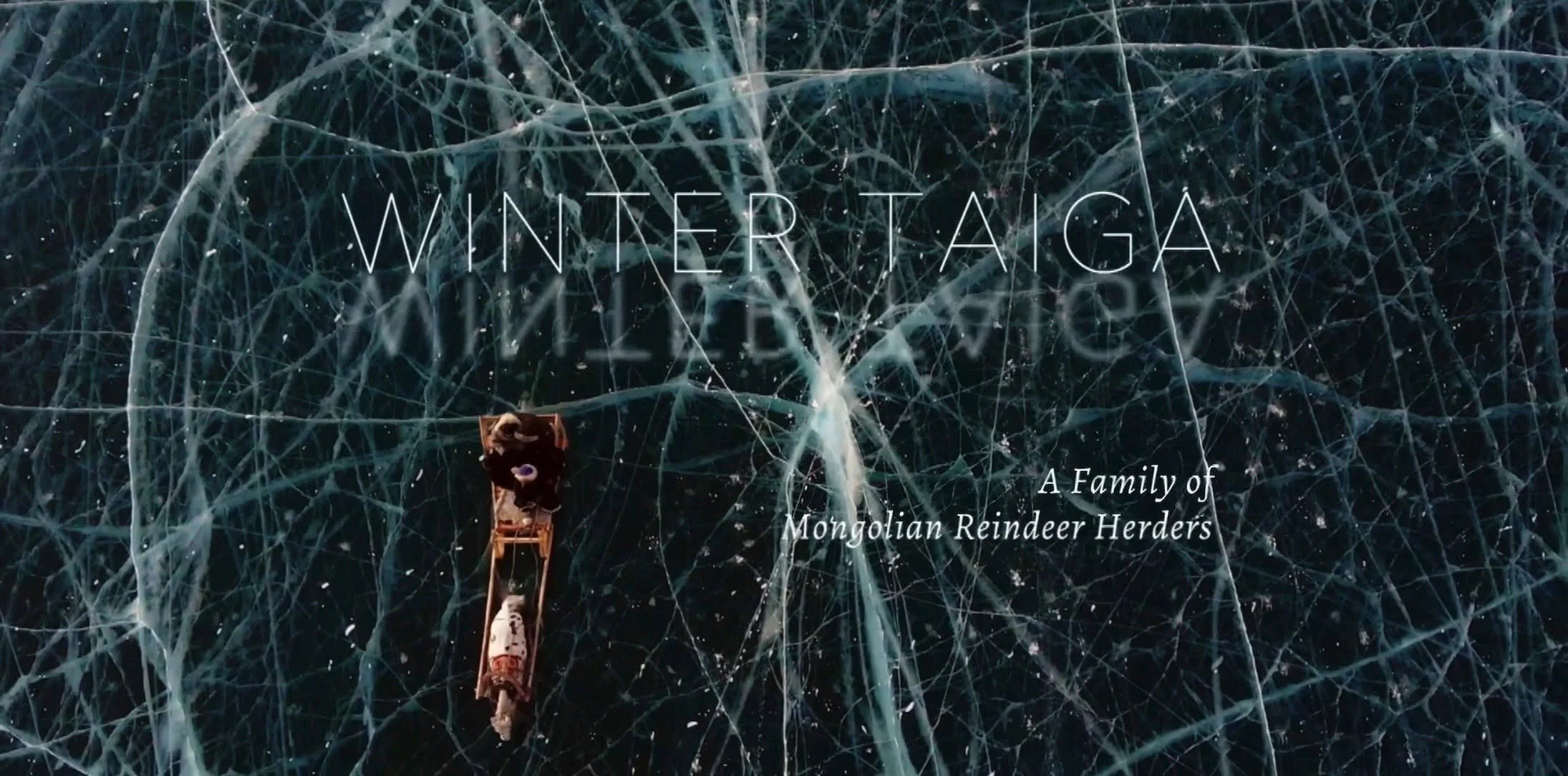
International Film - The Winter Taiga
It All Begins Here
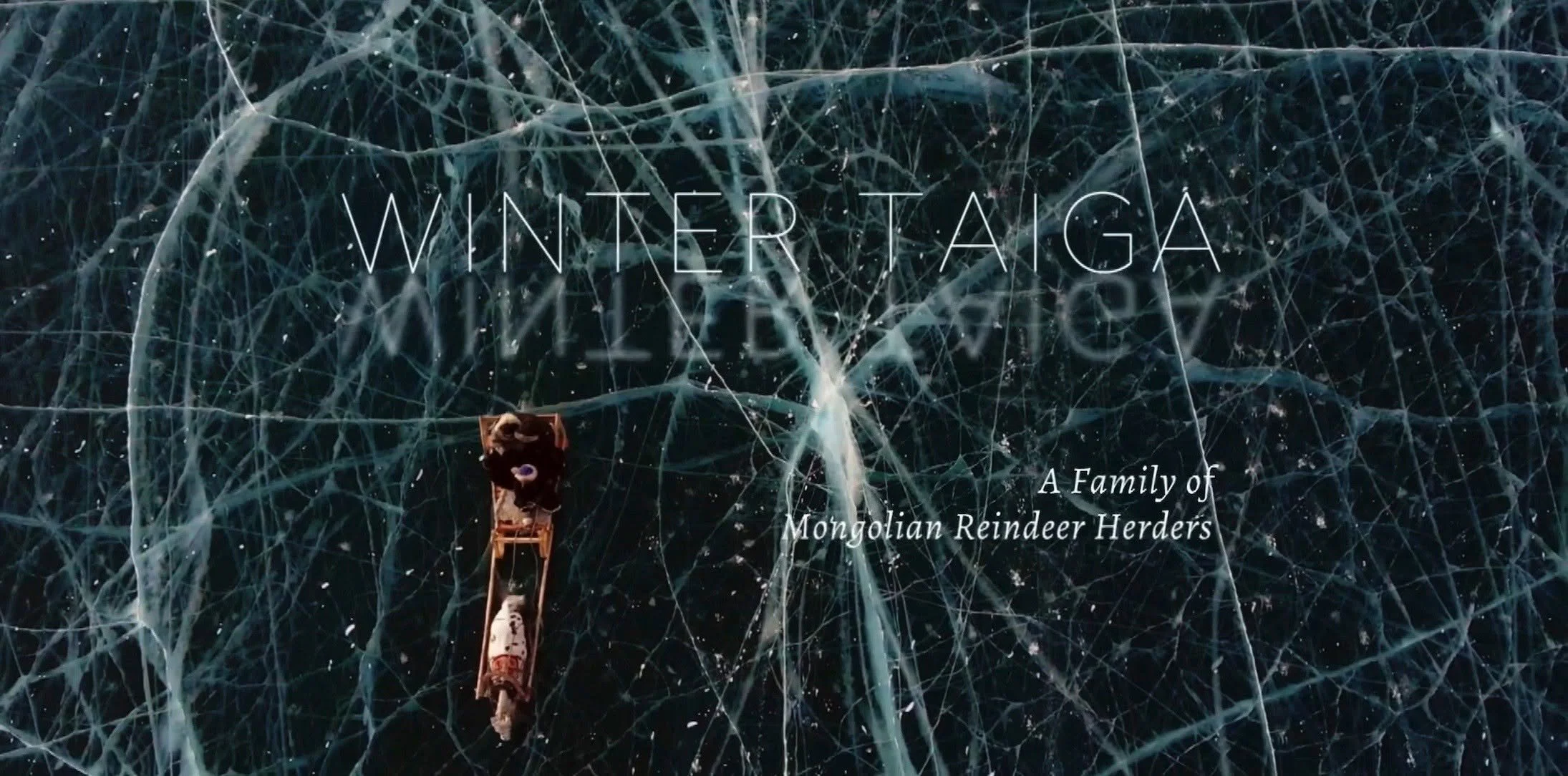
Film maker Donique Snyers captured the true magic of the Mongolian Winter Taiga in this award winingin documentarty
More Than Just Adventures
One of the things we're most proud of at Great Nomad Expeditions isn't just the journeys we create—it's the stories we're able to help tell.
Our latest documentary, The Winter Taiga, directed by Dominque Snyers, continues to be recognised internationally, screening at film festivals and earning awards and official selections around the world. While that's incredibly exciting, the real achievement isn't the trophies.
It's that audiences are connecting with authentic Mongolian stories.
For us, filmmaking has never been about creating a romanticised version of Mongolia or producing another travel film filled with dramatic drone shots. It's about working alongside talented filmmakers who take the time to listen, build trust and allow the people of Mongolia to tell their own stories in their own way.
The nomadic families, eagle hunters, reindeer herders and horsemen we work with aren't simply characters in a film—they're our friends, our colleagues and the heart of everything we do. Their voices deserve to be heard with honesty, respect and authenticity.
That same philosophy guides every Great Nomad Expedition. We don't just visit communities—we build long-term relationships, return year after year, and ensure the people who make these experiences possible remain at the centre of the story.
We're incredibly grateful to everyone involved in The Winter Taiga, Dominque Snyers and especially to the Mongolian families who trusted us to share a small part of their lives with the world.
Because the greatest stories aren't ours to tell—they're theirs. Our job is simply to help make sure they're heard.
Check out the film website here
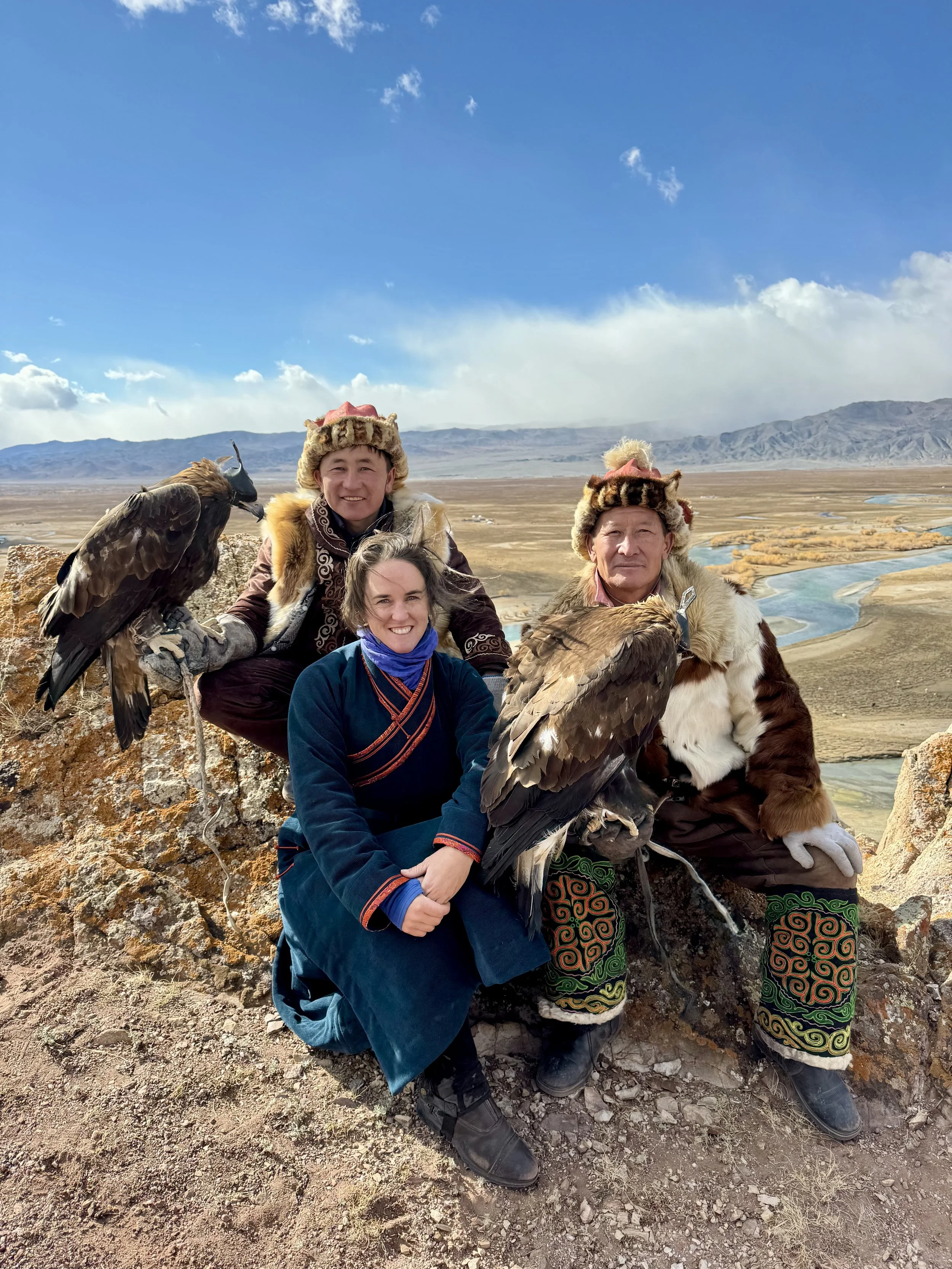
The allure of nomads, what makes Mongolia magical.
Why I keep coming back
The horses may have brought me to Mongolia, but it's the friendships, the stories and the families that keep bringing me back.

Why I Keep Coming Back
People often ask me why I keep returning to Mongolia.
This year marks 13 years since I first travelled there to ride the Mongol Derby. Back then, it was the horses that drew me in. The freedom of galloping across endless, unfenced landscapes with nothing but blue sky above and open steppe stretching to the horizon was unlike anything I'd ever experienced. It felt wild, untamed and completely alive.
But over the years, something changed.
It stopped being just about the riding.
It became about the people.
Some of my favourite memories aren't the big adventures at all—they're the quiet moments. Sitting around a campfire after a long day in the saddle, listening to stories I don't always fully understand but somehow still feel. Sharing salty milk tea inside a warm ger while the wind howls outside. Watching children race horses across the steppe with smiles that say everything.
Year after year I return to the same families. I've watched children grow up, celebrated milestones, shared laughter, tears and countless meals. Somewhere along the way, they stopped feeling like people I visited and started feeling like family.
That's why Great Nomad Expeditions exists. Not just to show people Mongolia's incredible horses and breathtaking landscapes, but to introduce them to the people who have made this country feel like a second home to me.
The horses may have brought me to Mongolia, but it's the friendships, the stories and the families that keep bringing me back.
Horse Riding Holidays in Mongolia
It All Begins Here
Our Sacred White Horse Expedition isn't simply a riding holiday. It's part physical journey and part spiritual one. Of course, you'll experience spectacular riding through green valleys, mountain passes and open meadows, but you'll also have the time to slow down, listen to local stories, meet the families who care for these remarkable horses and begin to understand why they are held in such high regard.
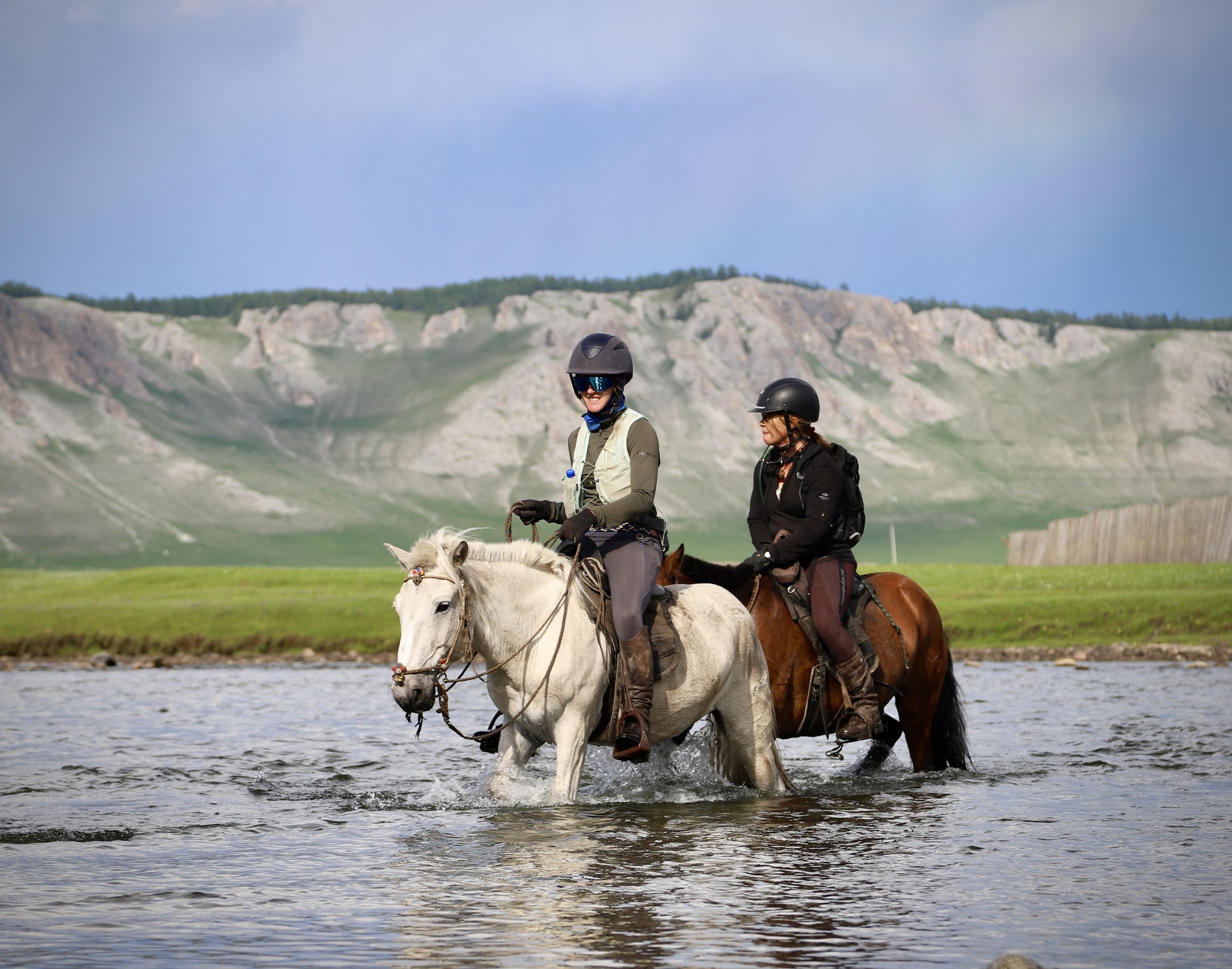
Crossing a river in the far north of Mongolia on one of the sacred white horses.
Why the Sacred White Horses Keep Calling Me Back
Over the past decade I've ridden more than 12,000 kilometres across Mongolia. I've crossed the frozen Gobi on camelback, travelled with eagle hunters in the Altai, followed reindeer through the northern taiga and ridden across endless steppe where the horizon seems to stretch forever. Every expedition has its own magic.
Yet one place continues to draw me back more than anywhere else—the homeland of Mongolia's Sacred White Horses.
There's something different about this landscape. The mountains feel quieter, the valleys seem untouched by time, and everywhere you go you'll hear stories of the white horses. They are more than beautiful animals; they are woven into Mongolia's history, spirituality and identity. For generations they have appeared in legends, songs and ceremonies, representing purity, strength and the deep connection between people, horses and the natural world.
What amazes me most is not just the mythology surrounding them, but their resilience. These horses survive in one of Mongolia's harshest environments, enduring long winters, rugged mountains and a truly wild existence. Watching them move effortlessly through this landscape gives you a new appreciation for why horses hold such an important place in Mongolian culture.
Our Sacred White Horse Expedition isn't simply a riding holiday. It's part physical journey and part spiritual one. Of course, you'll experience spectacular riding through green valleys, mountain passes and open meadows, but you'll also have the time to slow down, listen to local stories, meet the families who care for these remarkable horses and begin to understand why they are held in such high regard.
For me, that's what makes this expedition so special. It isn't about ticking another destination off a list. It's about seeing Mongolia through the eyes of the people who have lived alongside these horses for centuries.
If you've ever wanted more than just a holiday—if you want a journey that leaves you with a deeper understanding of horses, culture and one of the world's last great nomadic societies—the Sacred White Horse Expedition may become as unforgettable for you as it has been for me.